


Why Seals Need Their Space More Than You Need the Photo
Britain's coastline is one of the best places in the world to watch seals. Well over a third of the global grey seal population breeds around our shores, and our harbour, or common, seals are a familiar sight on sheltered estuaries and sandy banks from the Wash up to the Hebrides. Seeing a hauled-out group glistening in the afternoon sun is genuinely thrilling, and it is exactly that thrill that tempts people to creep closer.
But a seal hauled out on a rock is not loafing about for our entertainment. It is resting, digesting, warming up, moulting or nursing a pup. Every time a group is flushed into the water, they burn energy they cannot easily replace, pups can be separated from their mothers, and a crowded beach can turn into a stampede. Seals are also protected by law in the UK, and disturbing them, whether deliberately or through carelessness, can land you with a fine.
The good news is that the best views come from a sensible distance anyway. Here is how to enjoy these animals without ever being the reason they scatter.
Learn the Seal Calendar Before You Set Out
Timing your visit matters as much as where you stand. The breeding and moulting months are when seals are at their most vulnerable, and when disturbance does the most damage.
- Grey seals pup between September and December, with October and November the peak in most colonies. Pupping beaches fill with white-coated pups and protective mothers.
- Harbour (common) seals pup earlier, mostly June and July, often on sandbanks and in estuaries.
- Moulting takes place mainly between February and May, when seals spend long hours ashore and are reluctant to move.
During these windows, treat every haul-out site as sensitive. Keep to the paths, keep voices low, and if a group starts lifting heads or shuffling towards the water, you are already too close. Back off quietly and give them a chance to settle.
Clifftop Paths Are Your Best Seat in the House
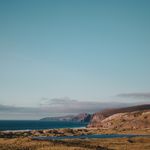
Some of the finest seal watching in the country happens from above. A clifftop gives you a clear line of sight, keeps your scent and silhouette below the birds and seals, and means you never set foot on a pupping beach.
Practical habits that make a real difference:
- Stay on waymarked coast paths, even when a tempting side track drops towards the shore. Those routes often exist to protect nesting and resting wildlife.
- Avoid standing on the skyline. Crouch slightly, or use a wall or gorse bush as cover so you are not a human-shaped silhouette against the sky.
- Keep dogs on a short lead, always. A loose dog on a beach can cause chaos in seconds, and even a barking dog on a clifftop alters seal behaviour.
- Move on after ten minutes or so. Long, lingering presence at a single viewpoint still counts as disturbance.
Use Glass, Not Footsteps
A pair of binoculars or a zoom lens will get you closer to a seal than your legs ever should. A 300mm lens on a crop sensor body, or a decent bridge camera, is plenty for frame-filling portraits from 100 metres or more.
Keep the following in mind when you are photographing or filming:
- Turn the flash off. A sudden burst of light can startle animals and ruin your shot anyway.
- Leave the drone in the bag. Aerial disturbance is one of the most stressful things you can do to a haul-out, and it is unwelcome on most sensitive stretches of coast.
- Never use recordings or calls to draw seals nearer. It disrupts natural behaviour and teaches animals to associate people with noise.
- Do not crowd a pup for a close-up, however photogenic. A mother disturbed off a beach may abandon her pup entirely.
On the Beach, in a Kayak, on a Boat
If you are on the water or on the sand, the rules shift slightly but the principle holds. Stay at least 100 metres from any seal on land, and never position yourself between a seal and the open sea, which is their only escape route.
Paddlers and small boat users should give haul-out sites a wide berth, avoid landing on pupping beaches, and resist following a curious seal that comes to investigate. If a seal approaches you, stay calm, keep still or paddle steadily away, and let it decide the distance. In estuaries and harbours, watch for seals resting on mudflats at low tide, which are easy to miss until you are almost on top of them.
Being a Good Neighbour on the Coast
If you find a seal that looks stranded, thin, injured or alone, do not attempt to move it, pour water over it, or encourage it back into the sea. Seals haul out for perfectly good reasons, and pups are often left while their mother feeds offshore. Keep people and dogs well back, note the location, and ring a marine wildlife rescue organisation or the local coastguard for advice.
Coastal living and coastal visiting come with a small contract: we get the views, they get the space. Keep to the clifftops, pack the zoom lens, respect the breeding months, and you will be rewarded with the sort of sighting that stays with you for years, with no harm done and no animals sent running.



John Doe
14 January, 2022Having no content in post should have adverse..
Chauffina Carr
10 April, 2022We use these tests all time! Killer stuff!
Jim Séchen
16 July, 2022Thanks for all the comments, everyone!